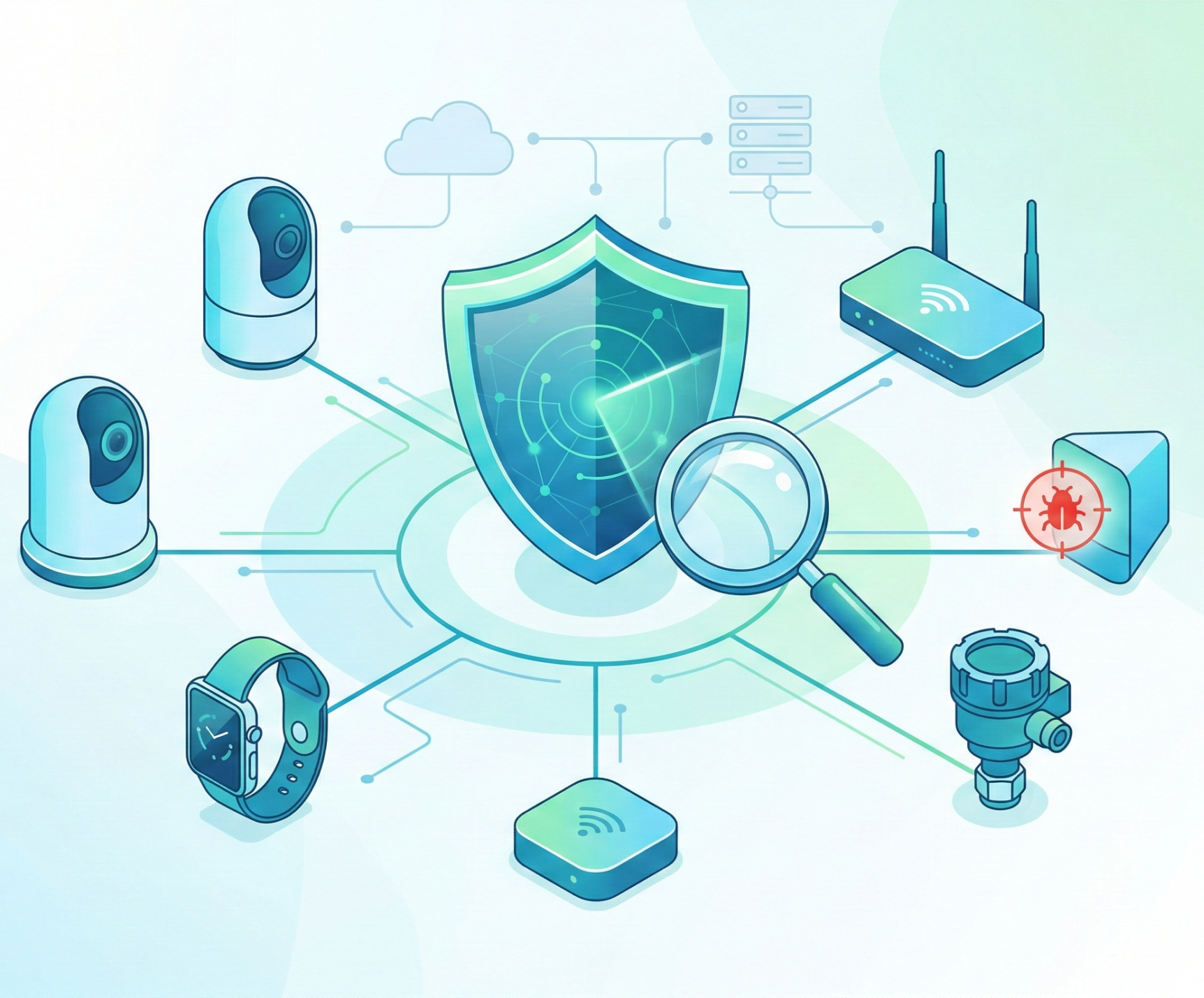
IoT Device Testing

Secure your IoT ecosystem with device audits, network inspections, wireless protocol testing, and firmware analysis.

  • Pen-test IoT devices for CVEs and zero-day vulnerabilities
  • Check encryption & authentication protocols
  • Firmware reverse engineering and code review
  • Cloud & network threat simulations

IoT Security

What is IoT Device Pentesting?

IoT Penetration Testing evaluates the security of connected devices, embedded firmware, communication protocols, and backend cloud integrations to identify exploitable weaknesses across the IoT ecosystem.

It focuses on hardware interfaces, firmware analysis, wireless communication, APIs, and device authentication to ensure smart devices remain resilient against real-world cyber threats.

  • Firmware & Embedded Testing
  • Hardware Interface Analysis
  • Wireless Protocol Assessment


Vulnerabilities

Common IoT Security Risks

We identify weaknesses across firmware, hardware interfaces, APIs, and communication layers within connected devices.

01
Insecure Firmware Updates
02
Hardcoded Credentials
03
Unsecured MQTT / IoT Protocols
04
Debug Interface Exposure (UART/JTAG)
05
Weak Encryption or No TLS
06
Cloud API Misconfiguration
07
Device Authentication Bypass
08
Physical Access Exploitation
09
Insecure Data Transmission


Assessment Goals

Core Objectives of IoT Pentesting

Firmware Security Analysis

Firmware Security Analysis

Reverse engineer firmware images to identify backdoors, insecure services, and exposed secrets within embedded systems.

Hardware Interface Testing

Hardware Interface Testing

Assess UART, JTAG, SPI and debug ports to detect unauthorized access paths to device memory or system controls.

Wireless Communication Security

Wireless Communication Security

Analyze Bluetooth, Zigbee, Wi-Fi and IoT protocols for interception, replay attacks, and insecure encryption.

Cloud & API Validation

Cloud & API Validation

Test backend APIs and cloud integrations to prevent remote compromise of connected devices.

Device Authentication Controls

Device Authentication Controls

Identify weak pairing mechanisms, default credentials, and insecure identity validation logic.

End-to-End IoT Threat Modelling

End-to-End IoT Threat Modelling

Map attack paths across hardware, firmware, mobile apps, and cloud services to ensure holistic protection.


Process

Our IoT Device Pentesting Process

01
Device Reconnaissance & Threat Modelling
02
Firmware Extraction & Analysis
03
Hardware Interface Testing
04
Wireless & Network Assessment
05
Exploitation & Risk Validation
06
Reporting & Retesting

Device Reconnaissance & Threat Modelling

We analyze device architecture, firmware structure, hardware exposure, and cloud integrations to define a precise IoT attack surface.

✓ Device ecosystem mapping
✓ Hardware exposure analysis
✓ IoT threat modelling


Coverage

What We Cover

We assess IoT ecosystems including devices, firmware, APIs, wireless communication, and cloud integrations to uncover security flaws, validate resilience, and reduce real-world attack risks.

Network Traffic Analysis

Device Firmware Assessment

Cloud Connectivity Testing

Wireless Protocol Evaluation

Signal & Antenna Testing

Backend API Security

Secure Communication Protocols

Vulnerability & Exploit Analysis

Device Integrity Checks

Key Management & Encryption

Technology

IoT Pentesting Tech Stack

Kali Linux
Nmap
Python Exploitation
Firmware Analysis
OWASP IoT Framework
Embedded Testing Tools
>